


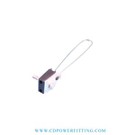


As a supplier of Suspension Clamp Clevis, I've had the privilege of working closely with these products and understanding their intricacies. While Suspension Clamp Clevises offer numerous benefits in various applications, it's important to acknowledge that they also come with certain disadvantages. In this blog, I'll delve into some of the drawbacks associated with Suspension Clamp Clevises, providing insights based on my experience in the industry.
1. Limited Load Capacity
One of the primary disadvantages of Suspension Clamp Clevises is their limited load - bearing capacity. These clamps are designed to hold and support electrical wires or cables, but they have a maximum weight limit that they can safely handle. When the load exceeds this limit, it can lead to structural failure. For instance, in high - voltage power transmission lines where heavy cables are used, a Suspension Clamp Clevis might not be able to support the weight of the cables over an extended period. This can result in the clamp loosening, which may cause the cable to sag or even break, leading to power outages and safety hazards.
The load capacity of a Suspension Clamp Clevis is determined by its design and the materials used in its construction. Generally, they are made of iron or steel, and while these materials are strong, they have their limitations. If you're considering using a Suspension Clamp Clevis for a project, it's crucial to accurately calculate the load it will need to bear and ensure that it falls within the clamp's rated capacity. You can find more information about Suspension Clamp Clevis on our website Suspension Clamp Clevis.
2. Corrosion and Rust
Another significant disadvantage is the susceptibility of Suspension Clamp Clevises to corrosion and rust. These clamps are often exposed to harsh environmental conditions, such as moisture, humidity, and chemicals. Over time, the metal surface of the clamp can start to corrode, which weakens its structure. Corrosion can also cause the clamp to lose its grip on the cable, leading to instability.
In coastal areas, where the air contains a high concentration of salt, the problem of corrosion is even more pronounced. The salt in the air accelerates the rusting process, and if not properly maintained, the Suspension Clamp Clevis can become completely useless. Regular inspection and maintenance are required to prevent corrosion. This may involve applying anti - rust coatings or replacing the clamps at regular intervals.
3. Installation Complexity
Installing a Suspension Clamp Clevis can be a complex and time - consuming process. It requires a certain level of technical expertise and specialized tools. Incorrect installation can lead to a variety of problems, such as improper cable support, which can cause the cable to vibrate or move. This vibration can, in turn, lead to wear and tear on the cable and the clamp itself.


For example, if the clamp is not tightened properly, it may not hold the cable securely, increasing the risk of the cable coming loose. On the other hand, over - tightening can damage the cable or the clamp. Additionally, the installation process may need to be carried out at height, which adds an extra layer of risk. Workers need to be trained and equipped with the necessary safety gear to perform the installation safely.
4. Compatibility Issues
Suspension Clamp Clevises are designed to work with specific types and sizes of cables. There can be compatibility issues when trying to use a clamp with a cable that is not within its recommended range. For example, if a clamp is designed for a particular diameter of cable and a cable of a different diameter is used, the clamp may not fit properly. This can result in a loose connection, which can lead to electrical problems and safety risks.
Moreover, different power systems may have different requirements for cable support. A Suspension Clamp Clevis that works well in one system may not be suitable for another. It's essential to carefully select the right clamp for the specific application to avoid compatibility issues. If you're looking for a Suspension Clamp for Double Wires, you can visit our website Suspension Clamp for Double Wires for more options.
5. High Cost of Maintenance
Maintaining Suspension Clamp Clevises can be expensive. As mentioned earlier, they are prone to corrosion and wear, which requires regular inspection and maintenance. The cost of inspection, replacement of worn - out parts, and anti - rust treatments can add up over time.
In addition, if a clamp fails and needs to be replaced, it can be a costly process. Not only do you have to purchase a new clamp, but you also need to factor in the cost of labor for the installation. For large - scale projects with a significant number of clamps, the maintenance cost can become a substantial financial burden.
6. Environmental Impact
The production and disposal of Suspension Clamp Clevises can have an environmental impact. The manufacturing process of these clamps often involves the use of energy - intensive methods and the consumption of raw materials. Additionally, when clamps reach the end of their lifespan, they need to be disposed of properly. If not disposed of correctly, they can contribute to environmental pollution.
The iron and steel used in the clamps are non - renewable resources, and their extraction and processing can have a negative impact on the environment. As a supplier, we are aware of these issues and are constantly looking for ways to reduce our environmental footprint, such as using more sustainable manufacturing processes and promoting the recycling of used clamps.
Conclusion
While Suspension Clamp Clevises are widely used in the electrical industry, they do have several disadvantages. These include limited load capacity, susceptibility to corrosion, installation complexity, compatibility issues, high maintenance costs, and environmental impact. However, with proper planning, installation, and maintenance, many of these issues can be mitigated.
If you're considering using Suspension Clamp Clevises for your project, it's important to weigh the advantages and disadvantages carefully. Our team of experts is here to help you make an informed decision. We can provide you with detailed information about our products and offer guidance on the best solutions for your specific needs. If you're interested in purchasing Suspension Clamp Clevises or have any questions, please feel free to contact us for a procurement discussion.
References
- Electrical Equipment Handbook: Design and Application by D. J. Cooper
- Power System Engineering by C. L. Wadhwa
- Handbook of Electrical Installation Practice by R. J. Warne