





Hey there! As a supplier of tension clamps, I often get asked a crucial question: "Do tension clamps need to be grounded?" Today, I'm gonna dive deep into this topic and share some insights based on my experience in the industry.
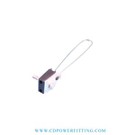
Let's first understand what tension clamps are. Tension clamps are used in electrical power systems to hold conductors under tension. They play a vital role in ensuring the stability and safety of power transmission and distribution lines. There are different types of tension clamps available in the market, such as Anchoring Tension Clamp, Plastic Insulated Tension Clamp, and Aluminium Alloy Dead End Clamp. Each type has its own features and applications, but the question of grounding applies to all of them.
The main reason for grounding in electrical systems is safety. Grounding provides a path for electrical current to flow safely into the earth in case of a fault. When a fault occurs, such as a short - circuit, the excess current can cause damage to equipment and pose a serious risk to people. By grounding the electrical components, we can prevent these hazards.
Now, let's talk about whether tension clamps need to be grounded. In most cases, tension clamps do need to be grounded. Here's why.
First of all, tension clamps are in direct contact with conductors that carry electrical current. If there is a fault in the system, like a breakdown in the insulation of the conductor, the tension clamp can become energized. Without proper grounding, this energized clamp can pose a significant shock hazard to anyone who comes into contact with it. For example, maintenance workers who need to work on the power lines may accidentally touch the clamp, and if it's not grounded, they could get electrocuted.
Secondly, grounding helps to protect the tension clamp itself. Electrical surges, such as those caused by lightning strikes, can generate high - voltage currents. These surges can damage the clamp if there is no proper grounding to divert the excess current. By grounding the tension clamp, we can ensure that the surge current is safely directed into the earth, reducing the risk of damage to the clamp.
However, there are some situations where grounding may not be strictly necessary. For instance, if the tension clamp is used in a low - voltage, isolated system where the risk of electrical shock is minimal. But even in these cases, it's still a good practice to ground the clamp for added safety.
Another factor to consider is the type of environment in which the tension clamp is installed. In areas with high humidity, saltwater exposure, or other harsh conditions, the risk of corrosion and electrical leakage is higher. Grounding can help to mitigate these risks by providing a safe path for any stray currents.
When it comes to grounding tension clamps, there are some best practices to follow. First, the grounding connection should be made using a proper grounding conductor. The conductor should have sufficient cross - sectional area to carry the fault current safely. It's also important to ensure that the connection is tight and secure to prevent any loose connections that could lead to increased resistance and potential overheating.
Regular inspections of the grounding system are also essential. Over time, the grounding conductor may corrode or become damaged, which can reduce its effectiveness. By conducting periodic inspections, we can identify and address any issues before they become serious problems.
Now, if you're in the market for high - quality tension clamps, we've got you covered. Our company offers a wide range of tension clamps, including the Anchoring Tension Clamp, Plastic Insulated Tension Clamp, and Aluminium Alloy Dead End Clamp. Our products are designed to meet the highest standards of quality and safety, and we can provide you with expert advice on grounding and installation.


If you're interested in purchasing tension clamps or have any questions about grounding, don't hesitate to get in touch. We're here to help you make the right choice for your electrical system. Whether you're a small - scale electrical contractor or a large - scale utility company, we can offer you the products and support you need.
In conclusion, grounding tension clamps is an important safety measure that should not be overlooked. It helps to protect people and equipment from electrical hazards and ensures the reliable operation of the electrical system. So, if you're using tension clamps in your electrical projects, make sure they are properly grounded.
References:
- Electrical Safety Standards and Guidelines
- Industry Best Practices for Tension Clamp Installation and Grounding