


Hey there! As a spacer damper supplier, I've seen a wide range of spacer dampers in action, each with its own unique features and uses. In this blog, I'm gonna break down the different types of spacer dampers out there so you can get a better idea of which one might be right for your project.
1. Square Frame Spacer Damper
The Square Frame Spacer Damper is a popular choice in the industry. It's designed with a sturdy square frame that provides excellent stability. This type of spacer damper is great for applications where you need to keep multiple conductors at a consistent distance from each other.
The square frame design helps to distribute the load evenly across the conductors. This is super important because uneven loading can lead to premature wear and tear on the conductors, which can ultimately result in power outages or other issues. The damper also has a built - in damping mechanism that helps to reduce vibrations caused by wind or other external forces.
One of the advantages of the square frame spacer damper is its versatility. It can be used in a variety of transmission and distribution lines, whether it's for high - voltage or low - voltage applications. It's also relatively easy to install, which can save you time and money during the installation process.
2. Square Spacer Damper
Next up is the Square Spacer Damper. This one is similar to the square frame spacer damper in terms of its shape, but it has some distinct features.
The square spacer damper is often used in situations where you need to dampen vibrations in a more targeted way. It has a more compact design compared to the square frame spacer damper, which makes it a great option for areas with limited space.
This type of damper is typically made from high - quality materials that are resistant to corrosion and environmental factors. This means it can withstand harsh weather conditions, such as extreme heat, cold, and humidity, without losing its effectiveness. The square spacer damper also has a unique damping system that can be adjusted according to the specific requirements of your project. This allows you to fine - tune the damping performance to achieve the best results.
3. Two Split Spacer Damper
The Two Split Spacer Damper is another interesting type of spacer damper. As the name suggests, it consists of two split parts that can be easily installed around the conductors.
This design makes it very convenient for maintenance and replacement. If one part of the damper gets damaged, you can simply replace that part without having to remove the entire damper. The two split design also allows for better access to the conductors for inspection and other maintenance tasks.

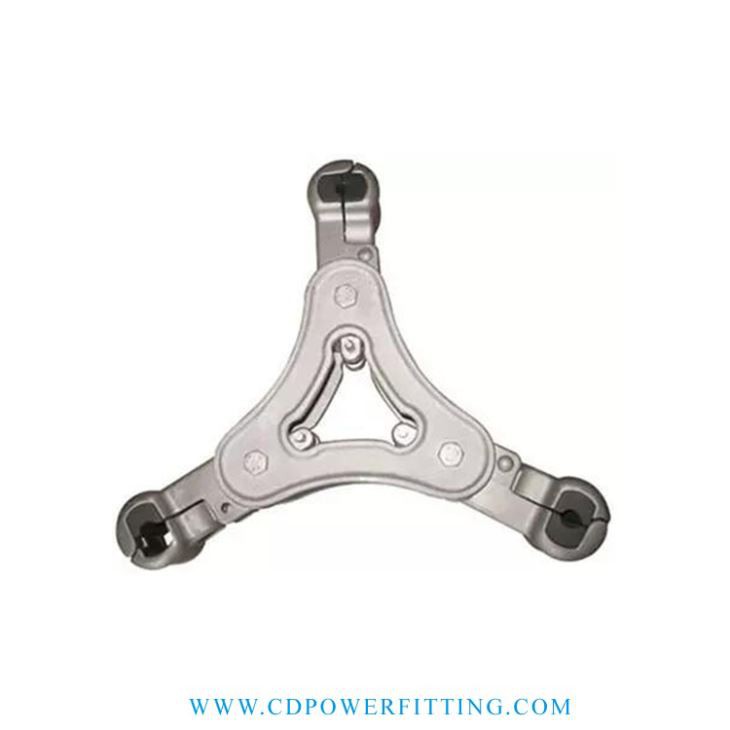
The two split spacer damper is effective in reducing sub - span oscillations, which are a common problem in multi - conductor transmission lines. These oscillations can cause fatigue in the conductors and lead to premature failure. The damper's damping mechanism helps to absorb the energy from these oscillations and keep the conductors stable.
Other Types of Spacer Dampers
Apart from the ones I've mentioned above, there are also other types of spacer dampers available in the market.
- Helical Spacer Damper: This type of damper has a helical shape that wraps around the conductors. It's very effective in reducing aeolian vibrations, which are caused by wind flowing across the conductors. The helical design helps to disrupt the airflow and reduce the formation of vortices, which in turn reduces the vibrations.
- Ball - and - Socket Spacer Damper: The ball - and - socket spacer damper uses a ball - and - socket joint to connect the different parts of the damper. This allows for a certain degree of flexibility, which can be useful in situations where the conductors need to move slightly. It also helps to distribute the load more evenly across the damper.
Choosing the Right Spacer Damper
When it comes to choosing the right spacer damper for your project, there are several factors you need to consider.
- Vibration Requirements: First and foremost, you need to determine the level of vibration that your conductors are likely to experience. If the vibrations are caused by wind, you might need a damper that is specifically designed to reduce aeolian vibrations. On the other hand, if the vibrations are due to sub - span oscillations, a different type of damper might be more suitable.
- Environmental Conditions: The environmental conditions in which the damper will be installed also play a crucial role. If the area has a lot of moisture or is prone to corrosion, you need to choose a damper that is made from corrosion - resistant materials. Similarly, if the area experiences extreme temperatures, the damper should be able to withstand those conditions.
- Installation and Maintenance: Consider how easy it is to install and maintain the damper. Some dampers are more complex to install, which can increase the installation cost. And if the maintenance is difficult, it can lead to higher long - term costs.
Why Choose Our Spacer Dampers
As a spacer damper supplier, we take pride in offering high - quality products. Our spacer dampers are made from the best materials available in the market, ensuring durability and reliability. We have a team of experts who can help you choose the right damper for your specific needs. Whether you're working on a small - scale project or a large - scale transmission line, we've got you covered.
We also offer competitive pricing and excellent customer service. We understand that every project is unique, and we're committed to providing you with the best solutions. If you're in the market for spacer dampers, don't hesitate to get in touch with us. We can have a detailed discussion about your requirements and provide you with a customized quote.
If you're interested in purchasing spacer dampers or have any questions about the different types, feel free to reach out. We're here to help you make the right choice for your project.
References
- Power System Engineering Handbook, 3rd Edition
- Handbook of Transmission Line Engineering
So, that's a wrap on the different types of spacer dampers. I hope this blog has given you a better understanding of what's out there and how to choose the right one for your needs. Remember, if you have any questions or want to start a purchase negotiation, just drop us a line.