


U and D shackles are essential components in various industries, including maritime, construction, and manufacturing. These shackles are designed to connect different components, providing a secure and reliable link. However, to ensure safety and efficiency, it's crucial to calculate their load capacity accurately. As a leading U and D shackle supplier, I'll share some insights on how to calculate the load capacity of these vital components.
Understanding U and D Shackles
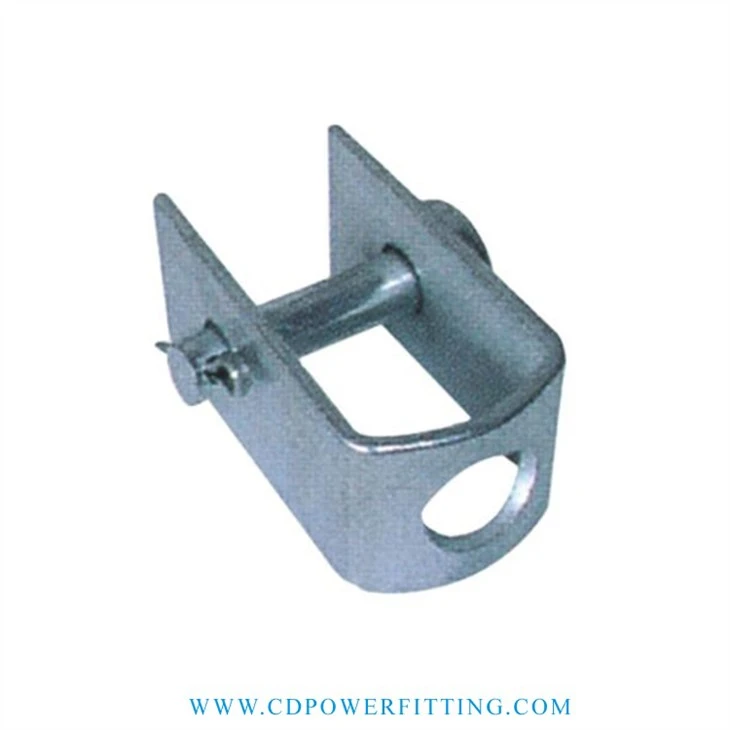
Before delving into load capacity calculations, let's have a quick overview of U and D shackles. U shackles, also known as U bolts or U clevises, have a U - shaped body with threaded ends. They are commonly used for securing ropes, cables, or other objects. The U Clevis Tongue is a specific type of U shackle that offers good maneuverability and connection for different applications.
D shackles, on the other hand, are D - shaped and have a much smaller pin hole compared to U shackles. They are known for their strength and are often used in high - stress applications. The Hot - dip Galvanized Steel D Anchor Shackle is a popular choice, especially in marine environments due to its corrosion resistance.
Factors Affecting Load Capacity
Several factors influence the load capacity of U and D shackles:
Material
The material of the shackle is a primary determinant of its load - bearing ability. Different materials have different mechanical properties such as yield strength and ultimate tensile strength. For example, stainless steel shackles, like the Stainless Steel Twisted Shackle, offer high strength and excellent corrosion resistance. Steel shackles, depending on their alloy and heat treatment, can also have varying load capacities.
Design and Dimensions
The design of the shackle, including its shape, size, and the diameter of the pin, plays a significant role. A larger - diameter pin generally provides more strength. The overall dimensions of the shackle body also affect how it distributes the load. For instance, a well - proportioned D shackle can better handle axial loads compared to a poorly designed one.
Working Conditions
The environment in which the shackle operates can impact its load capacity. Factors such as temperature, humidity, and the presence of corrosive substances can degrade the material over time, reducing its strength. In high - temperature environments, the material may lose some of its mechanical properties, thus decreasing the allowable load.
Calculating the Load Capacity
Manufacturer's Specifications
The first and most reliable source for load capacity information is the manufacturer's specifications. Reputable suppliers, like us, mark each shackle with its working load limit (WLL). This is the maximum load that the shackle can safely support under normal working conditions. Always refer to these markings and follow the manufacturer's guidelines.
Using Mathematical Formulas (Generalized Approach)
Although manufacturer's specs are the best bet, in some cases, a more in - depth understanding requires mathematical calculations. For simple shackles under static axial loads, we can use basic engineering principles.
The formula for calculating the tensile strength of a shackle pin (a critical part in load - bearing) is:
[ \sigma=\frac{F}{A} ]
where (\sigma) is the stress in the material, (F) is the applied force (load), and (A) is the cross - sectional area of the pin.
The cross - sectional area of a circular pin with diameter (d) is (A = \frac{\pi d^{2}}{4})
To ensure safety, the stress (\sigma) should be less than the allowable stress (\sigma_{allow}) of the material. The allowable stress is determined by dividing the ultimate tensile strength (\sigma_{uts}) of the material by a safety factor (SF)
[ \sigma_{allow}=\frac{\sigma_{uts}}{SF} ]
The safety factor accounts for uncertainties in loading, material properties, and potential wear and tear. For most applications, a safety factor of 4 - 6 is commonly used.
Let's assume we have a D shackle with a pin diameter (d = 20) mm ((0.02) m) made of a steel with an ultimate tensile strength (\sigma_{uts}=500) MPa ((500\times10^{6}) Pa) and a safety factor (SF = 5)

First, calculate the allowable stress:
[ \sigma_{allow}=\frac{500\times10^{6}}{5}=100\times10^{6}\text{ Pa} ]
Next, calculate the cross - sectional area of the pin:
[ A=\frac{\pi\times(0.02)^{2}}{4}=\ 3.14\times10^{-4}\text{ m}^{2} ]
Then, from (\sigma=\frac{F}{A}), we can solve for the maximum allowable load (F)
[ F=\sigma_{allow}\times A=100\times10^{6}\times3.14\times10^{-4}=31400\text{ N}\approx 3.14\text{ kN} ]
Dynamic and Impact Loads
In real - world applications, shackles often experience dynamic and impact loads, which are much more challenging to calculate. Dynamic loads occur when the load is changing over time, such as in a moving conveyor system or a hoisting operation. Impact loads are sudden, short - duration loads, like those when a load is dropped or a machine suddenly starts or stops.
To account for these loads, the working load limit is usually further reduced. A dynamic load factor (DLF) is applied, which is typically greater than 1. For example, for moderate dynamic loading, a DLF of 1.2 - 1.5 may be used, and for severe impact loading, a DLF of 2 - 3 or even higher may be required.
Importance of Regular Inspections
Even with accurate load - capacity calculations, regular inspections are vital. Inspect the shackles for signs of wear, deformation, corrosion, or cracking. A shackle that shows any of these signs may have a reduced load capacity, even if the original calculations were correct. Replace any damaged shackles immediately to avoid safety hazards.
Conclusion
Calculating the load capacity of U and D shackles is a critical process that ensures safety and efficiency in various applications. By understanding the factors that affect load capacity, referring to manufacturer's specifications, and using appropriate mathematical formulas, you can make informed decisions about shackle selection.
As a reliable U and D shackle supplier, we are committed to providing high - quality products with accurate load - capacity markings. If you have any questions about our products, load - capacity calculations, or need help in selecting the right shackles for your specific application, we'd be glad to assist you. Contact us for procurement discussions and let us help you find the perfect solution for your needs.
References
- Budynas, R. G., & Nisbett, J. K. (2011). Shigley's Mechanical Engineering Design. McGraw - Hill.
- Marks, L. S. (1978). Marks' Standard Handbook for Mechanical Engineers. McGraw - Hill.