



A tension clamp, also known as a dead-end clamp, is a crucial component in electrical power transmission and distribution systems. It plays a vital role in securing conductors at the end of a line or at points where the direction of the line changes. As a leading tension clamp supplier, I am excited to share with you how these essential devices work and their significance in the electrical industry.
Basic Structure of a Tension Clamp
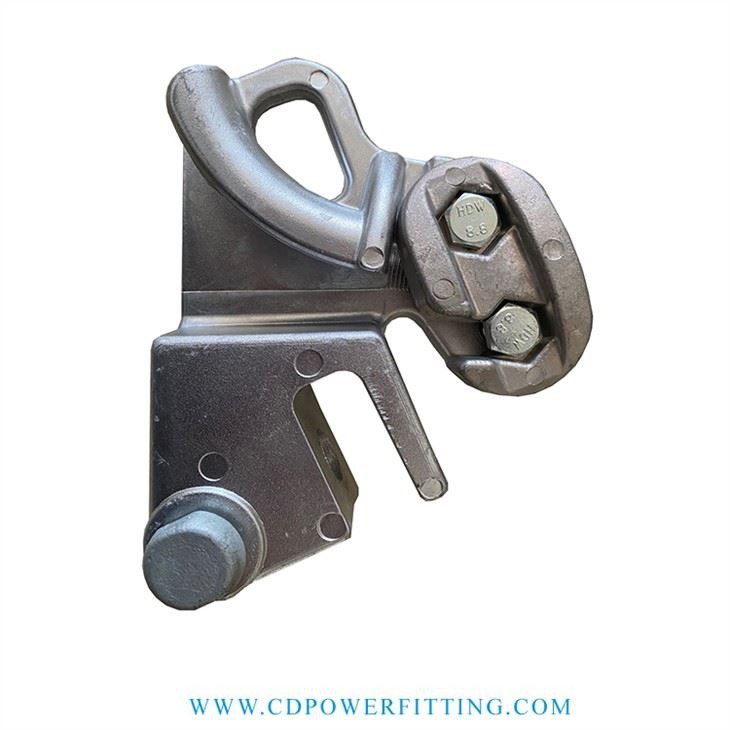
Before delving into how a tension clamp works, it's important to understand its basic structure. A typical tension clamp consists of several key parts: the body, which provides the main structural support; the jaws or grips, which hold the conductor firmly in place; and the fastening elements, such as bolts or nuts, that secure the clamp to the conductor and the supporting structure.
The body of the tension clamp is usually made of high - strength materials like steel or aluminum alloy. These materials offer excellent mechanical properties, ensuring that the clamp can withstand the high tensile forces exerted by the conductor. The jaws are designed with a special profile to maximize the contact area with the conductor, which helps to distribute the tension evenly and prevent damage to the conductor.
How a Tension Clamp Works
The primary function of a tension clamp is to transfer the tension force from the conductor to the supporting structure, such as a pole or a tower. When a conductor is under tension, it exerts a pulling force along its length. The tension clamp acts as an interface between the conductor and the support, allowing this force to be safely transferred.
Installation Process
The first step in the operation of a tension clamp is its installation. When installing a tension clamp, the conductor is first inserted into the jaws of the clamp. The jaws are then tightened around the conductor using the fastening elements. For example, in a Bolted Tension Clamp, bolts are used to apply pressure to the jaws, causing them to grip the conductor tightly.

The tightness of the grip is crucial. If the clamp is not tightened enough, the conductor may slip out of the clamp, leading to a loss of electrical connection and potentially dangerous situations. On the other hand, if it is over - tightened, it can damage the conductor, reducing its lifespan and electrical performance.
Force Distribution
Once the tension clamp is properly installed, it starts to distribute the tension force. When the conductor is pulled, the force is transmitted from the conductor to the jaws of the clamp. The design of the jaws ensures that the force is spread over a large area of the conductor, minimizing the stress on any single point.
The body of the tension clamp then transfers this force to the supporting structure. The connection between the clamp body and the support is designed to be strong and reliable. For instance, in some cases, the clamp may be attached to the support using a clevis or a U - bolt, which can withstand high - load forces.
Electrical Conductivity
In addition to its mechanical function, a tension clamp also needs to provide good electrical conductivity. This is because it is part of the electrical circuit. The contact between the jaws and the conductor should be as low - resistance as possible to minimize power losses. High - quality tension clamps are often coated with materials that enhance electrical conductivity and prevent corrosion.
Different Types of Tension Clamps and Their Working Principles
There are several types of tension clamps available in the market, each with its own unique working principle and application scenarios.

Carbon Fiber Composite Core Conductor Tension Clamp
The Carbon Fiber Composite Core Conductor Tension Clamp is designed specifically for use with carbon fiber composite core conductors. These conductors are known for their high strength - to - weight ratio and excellent electrical performance.

The working principle of this type of clamp is similar to that of a traditional tension clamp. However, due to the unique properties of carbon fiber composite core conductors, the clamp needs to be designed to provide a more precise and gentle grip. The jaws of the carbon fiber composite core conductor tension clamp are often made of materials that can conform to the shape of the conductor without causing damage to the carbon fiber core.
New Type Tension Clamp
The New Type Tension Clamp incorporates the latest technologies and design concepts. It may feature innovative fastening mechanisms or materials that improve its performance and ease of installation.
For example, some new - type tension clamps use self - locking mechanisms that can automatically adjust the clamping force according to the tension of the conductor. This not only simplifies the installation process but also ensures a more reliable connection.
Importance of Tension Clamps in Electrical Systems
Tension clamps are of utmost importance in electrical power transmission and distribution systems. Here are some key reasons:
- Safety: By securely holding the conductors in place, tension clamps prevent the conductors from sagging or coming loose. This reduces the risk of electrical short - circuits, fires, and other safety hazards.
- Reliability: A well - designed and properly installed tension clamp ensures a stable electrical connection. This helps to maintain the reliability of the power supply, reducing the frequency of power outages.
- Efficiency: Good electrical conductivity in tension clamps minimizes power losses during transmission. This improves the overall efficiency of the electrical system and reduces energy consumption.
Quality Assurance and Testing
As a tension clamp supplier, we understand the importance of quality assurance. All our tension clamps undergo rigorous testing before they are released to the market.
Mechanical tests are conducted to ensure that the clamps can withstand the specified tensile forces. Electrical tests are also performed to measure the contact resistance and ensure good electrical conductivity. In addition, environmental tests are carried out to evaluate the performance of the clamps under different temperature, humidity, and corrosion conditions.
Conclusion
In conclusion, tension clamps are essential components in electrical power systems. Their ability to securely hold conductors and transfer tension forces is crucial for the safety, reliability, and efficiency of the system. Whether it's a Carbon Fiber Composite Core Conductor Tension Clamp, a New Type Tension Clamp, or a Bolted Tension Clamp, each type plays a specific role in different applications.
If you are in the market for high - quality tension clamps, we invite you to contact us for more information and to discuss your specific requirements. Our team of experts is ready to provide you with the best solutions and support.
References
- Electrical Power Transmission System Engineering: Analysis and Design, by Turan Gonen
- Handbook of Electrical Engineering, edited by John G. Webster